EXHIBITION

Other than core programme, there’d be three exhibitions – 500 Years of Reformation, 150 Years of Protestantism in Taiwan, and 40 Years of CCCOWE Movement. Pictures and installations will be employed to take us passing through the time tunnel, pondering and planning for the next move of Chinese churches.

500 Years of Reformation - Visual Arts vs. Christianity

Looking back on the 1517 Protestant Reformation from the perspective of art and culture, it brought about Counter-Reformation Art – another viewpoint to understand Baroque Art.


150 Years of Protestantism in Taiwan

When Dr. James Laidlaw Maxwell arrived Tainan in June 1865, he started medical mission work to serve the local residents. Unlike the period of Dutch occupation when pastors were sent by East India Company, Dr. Maxwell was the first Protestant missionary sent by the Presbyterian Church.


40 Years of CCCOWE Movement

As over seventy Chinese Church leaders attended the International Congress on World Evangelism 1974’ in Lausanne, they came to have a burden of “Chinese churches in one accord, proclaiming the gospel until Christ's return.”

500 Years of Reformation - Visual Arts vs. Christianity


Looking back on the 1517 Protestant Reformation from the perspective of art and culture, it brought about Counter-Reformation Art – another viewpoint to understand Baroque Art. Moreover, since art developed in Protestant areas by and large depicted a social context that yearned for democracy, civism and internalization of individuals, it is considered as one of the earliest forms of modern art. Even the world is highly secularized, it is obvious that Christian art still has its presence in the contemporary time.

This exhibition aims to be an overture of “500 Years of Reformation”. By showing the richness of Christianity through historical art pieces, it is our prayer that it will become a platform to invite today’s churches to rethink art and culture ministries. Under three main themes, art images will be displayed with attempts to reveal their hidden good news.


Icon vs. Role Model

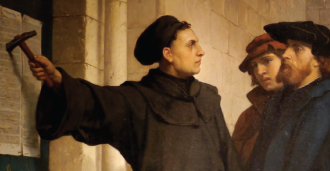
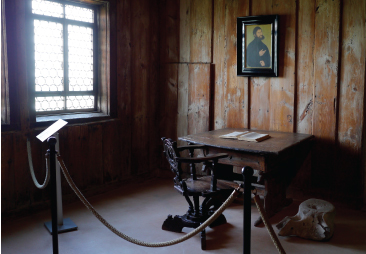
Within the spectrum of art, "Iconoclasm" is a significant symbol of Protestantism in the midst of the 16thcentury Reformation. While “Byzantine Iconoclasm” of the 8th and 9thcentury affirmed the presence of religious images in church space, “Iconoclasm” actively removed those images and thus reformed the ritual of worship that had been employed by churches since the Middle Ages. Although religious images were destroyed and removed from church space, a new trend emerged at the same time – making images of Protestant Reformers.

Living in today’s world, where images are messages, how should we perceive the images of those Reformers? Are those icons or role models? And, how about the discrepancy between the stories of Martin Luther in “History Painting” and the facts?


it is about the inseparable relationship between God and mankind as well as testimonies lived out in various contexts.


Art of Western Christianity

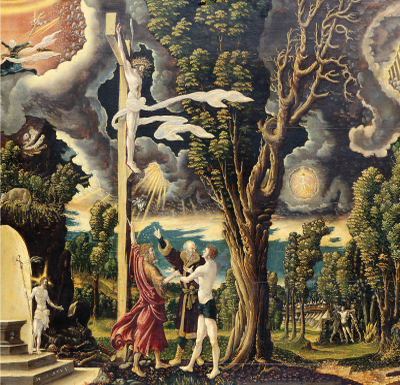
During the turbulent period of Protestant Reformation, different doctrinal interpretations of the Christian faith were vividly present in various art forms. Unlike the unshakable religious art of Eastern Orthodox Church, Catholics and Protestants were giving new meanings to Christian art on the Europe continent. On the one hand, the Catholic Church was going after collective and dramatic Baroque style, emphasizing heavenly visions as the contents. On the other hand, due to the different denominations developed within the Protestant Church, it was no easy task to give a name to its art, making “Protestant Art” relatively latent. Nevertheless, there were still glimpses of Protestant presence in the artworks when art was being secularized in Protestant areas.

Whether being influenced by the Catholic Church or Protestant Church, those artworks are still relevant to our perspective on life and our living attitude in today’s world – a world of diversification and images. The main thrust of these artworks is not about delivering the correctness of Christian faith; rather, it is about the inseparable relationship between God and mankind as well as testimonies lived out in various contexts.


Church and Contemporary Art

Amidst Western World’s secularization during the 18thcentury, Christianity was marginalized. While the critical and creative art forms of contemporary artists have become objects for contemplation, the relatively patent characteristics of Christian art failed to draw serious attention. After the Second World War, churches in Europe enthusiastically engaged in dialogue with contemporary art, no longer hoping to use art as means to promote the “right” faith nor to serve the illiterates; rather, simply depicting religious stories.

After churches have accepted artists’ unique ability to interpret the world, artworks are brought into church space, connecting the sacred with the secular. When contemporary art shows its presence in churches, Christians might be compelled to rethink our own faith, while others might be attracted and moved by they see and what they hear.

Curators: Rev. CHUANG Hsin-te, Mr. LUO Song-en


BACK

150 Years of Protestantism in Taiwan


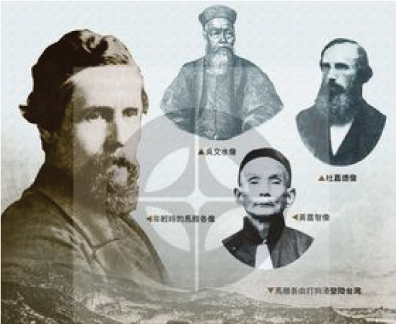
When Dr. James Laidlaw Maxwell arrived Tainan in June 1865, he started medical mission work to serve the local residents. Unlike the period of Dutch occupation when pastors were sent by East India Company, Dr. Maxwell was the first Protestant missionary sent by the Presbyterian Church. In the following 150 years, Protestant missionaries have been faithfully laboring on the hard soil of Taiwan in cultural, medical, educational as well as social welfare aspects, bearing bountiful fruit with their loving devotion.

As 2015 marks the 150th Anniversary of Protestantism in Taiwan, “Cosmic Light” has compiled innumerable historical documents to produce an exhibition with 150 captioned images, sharing the invaluable contribution made by Protestant missionaries. By showing Protestantism’s 150 years in Taiwan, it is our prayer that viewers will be moved by the tears and blood shed by missionaries out of their devoted love for Christ. In the days to come, may we not only have yet more Christians made in Taiwan, but also more missionaries sent from Taiwan!


BACK

40 Years of CCCOWE Movement


As over seventy Chinese Church leaders attended the International Congress on World Evangelism 1974’ in Lausanne, they came to have a burden of “Chinese churches in one accord, proclaiming the gospel until Christ's return.” Two years later, the first Chinese Congress on World Evangelization (CCOWE) was held and Chinese Coordination Centre of World Evangelism (CCCOWE) was established to mobilize worldwide Chinese churches to collaborate in carrying out the Great Commission.

Today, CCCOWE still stays true to its vision and remains faithful to its mission. As CCCOWE Movement is going to celebrate its 40thAnniversary in 2016, “Cosmic Light” – a parachurch organization in Taiwan who’s very experienced in doing research on Chinese Church history – helps to develop an exhibition about CCCOWE’s journey. We sincerely invite you to join us to look back, to give thanksgiving, as well as to seize the missional opportunity of the 21stcentury to build disciples and to reach all nations for our LORD!


BACK